A grandchild who's growing up faster than you expected.
A daughter who should know she's on your mind.
You don't need a reason. You don't need a holiday. You just need to know that once a month, something real shows up in their mailbox — not a notification, not a text — a letter. With a poem inside that says what you've been carrying.
Read one of our poems.
The Waves
3 min read
The Shoe
2 min read
The Waves
When I was seven, maybe eight,
We drove down to the shore,
The summer wind through half-cracked glass,
My sandals on the floor.
The sky was bright as polished tin,
The gulls wheeled white and free,
And all the world felt wild and huge
The first time I saw sea.
I loved it from the blanket, far
Beyond the salted grass,
But when the water rushed my feet
I cried to let it pass.
It came alive, that shining blue,
Too loud, too cold, too fast;
I reached for you with both my hands
And begged the waves to pass.
You laughed—not cruelly, never that—
But with that easy grace
That made the whole world seem less hard
Whenever I saw your face.
You took my hand and led me in
Where foam curled round our knees,
Then tucked my hair behind my ear
And spoke above the breeze:
"My girl, don't run from every wave.
Turn round and face it true.
Plant both your feet, bend just a bit,
And let it roll through you."
I shook my head. I clung to you.
I thought that I would fall.
But you just smiled and held my hand
And did not move at all.
So when the next wave gathered up
Its white and rising wall,
I faced it like you told me to—
And no, it was not small.
It struck, it chilled, it took my breath,
It tugged hard at my shins—
But when it passed, I was still there,
The sea, the sky, my skin.
You squeezed my hand and said, "You see?
It's strong, but so are you."
Then sent me laughing through the foam
As only mothers do.
To you, it was a summer day,
A child afraid of spray,
A little lesson by the shore
To help me through the day.
You never knew I took those words
And wore them year by year,
Like something stitched beneath my ribs
Whenever life drew near.
When I was fifteen, trembling hard
Outside a brand-new school,
I heard you in the pounding halls:
Stand steady. Breathe. Be still.
When my first real heartbreak came
And split my sleep in two,
I stood inside that drowning ache
The way you taught me to.
When I was twenty-three and lost
In some bright, merciless city,
With rent past due and hope worn thin,
Your lesson still stayed with me.
And when the doctor closed the door
Before I could speak plain,
I felt the old salt at my knees
And faced that wave again.
So, Mother, if you ever thought
Your days were small or plain,
Or wondered what of yours lived on
When years and children change—
It lives in me each time life rears
Its cold and breaking blue.
I plant my feet. I lift my chin.
I let it roll me through.
You thought you taught a frightened child
How not to fear the sea.
What you really taught me, Mom,
Was how the world could be—
How wild, how deep, how hard, how bright,
How beautiful, how true;
And that I did not have to flee—
I could stand, and make it through.
The Shoe
A boy once asked an old, old man,
"Please tell me what love is."
The old man smiled and took his coat
And said, "Come walk with me."
They passed a house with peeling paint,
A porch worn smooth and pale,
Where in a chair an old wife sat
Beneath the evening veil.
Her hands were bent, her silver hair
Was braided neat and slow,
And by her side her husband knelt
To tie her fallen shoe.
He did not speak in grand, bright words,
Nor kneel like poets do;
He simply tied the laces firm
And asked, "Too tight for you?"
She touched his cheek. He tucked her shawl
More warmly round her arm.
Then checked the sky and closed the gate
To keep her safe from harm.
The young man said, "But where is love?
I thought that love would shine."
The old man laughed and pointed there:
"My son, it does. Look fine."
"For love is not in roses kept
For one sweet week in spring.
It lives in knowing when she's cold
And mending little things.
It lives in walking just as slow
As someone's aging pace.
It lives in learning every line
Of one beloved face.
It lives in soup on days of rain,
In tea brought up to bed,
In lamps turned on before the dark,
In kind and careful bread.
It lives in choosing, day by day,
To stay when days are long,
To make a shelter of your hands,
To turn routine to song."
The boy stood still beside the fence
And watched the old pair there:
The husband brushed a leaf away
From out his good wife's hair.
And in that small and quiet act
The truth came soft and clear:
To love is not to speak it most,
But make it felt and near.
So if you ask me how to love,
I'd tell you what I know:
Love is the steady work of care
That helps another grow.
It is the hand that does not tire,
The heart that lingers near,
The gentle, ordinary grace
Of keeping someone dear.
❧
Start today. By next month, someone you love will have poems on their nightstand.
1. Tell us who.
Thirty seconds. That's all this takes. Tell us who the special person is — a mom, a friend, a daughter — and we'll take it from there.
2. They'll find the first envelope and wonder who sent it.
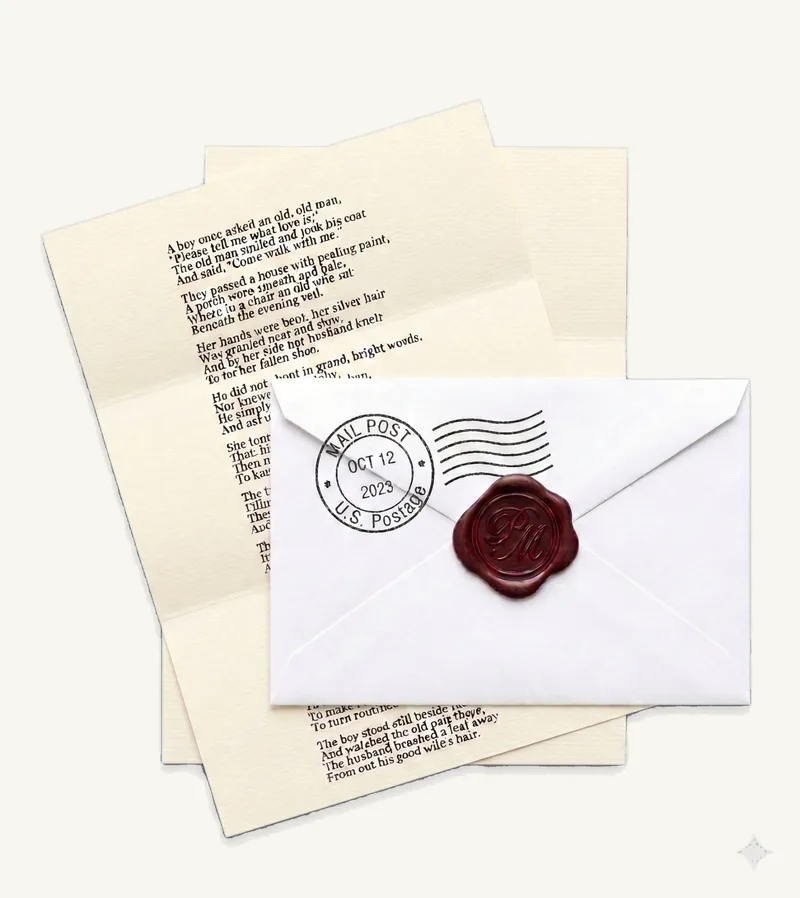
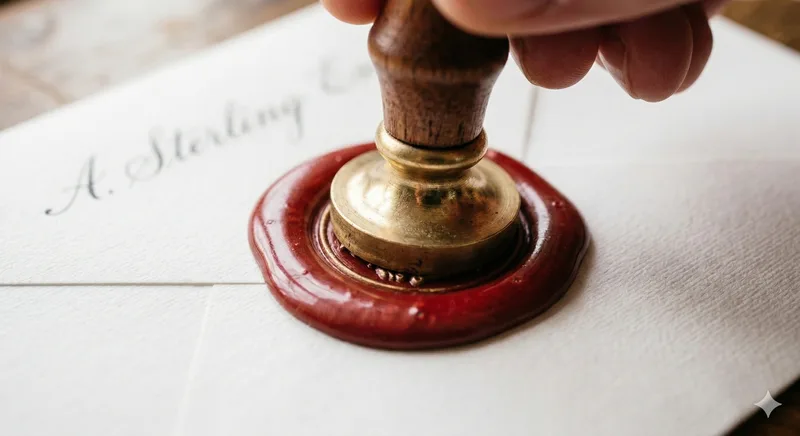
We can tell them who sent it, or not. It's up to you. A sealed envelope with a burgundy wax seal. Three poems on paper thick enough to feel intentional. They'll read them more than once.
3. By month three, it's a ritual. By month six, they have a collection.
One day your mother will call and say, "I got my poems today." And you'll know you gave her something no one else thought to give.
Start sending.
Pick someone who matters to you. Give us their name and address. Every month, three story poems arrive at their door — sealed with wax, printed on premium paper, a real reminder that they are loved.